Granite vs. Quartz Countertops: Which Is Better for Denver Kitchens in 2026? Ever been in a showroom with two samples that are almost identical, one at $55 per square foot and the other at $90, and never know which sample you’ll come to regret? For most homeowners, it is the granite dilemma vs quartz. And the answer isn’t which one looks better under showroom lighting. It’s which one survives your actual kitchen, your cooking habits, your windows, your kids, your budget, and the way you actually live in that space. The majority of people are sold on the looks and learn the performance distinction after the check clears. This is an exception to that rule.
What You’re Actually Comparing
Granite is a quarried stone. Each slab is distinctively created over millions of years from the minerals of Feldspar, Mica, and Quartz. The earth has no additives, no synthetic anything, and that’s exactly what you see.
Quartz is engineered. It is comprised of about 90% crushed natural quartz, held in place by polymer resins and pigments. That manufacturing process gives it uniformity and non-porosity, but it also introduces vulnerabilities that natural stone simply doesn’t have. Knowing that this difference is sufficient to account for nearly all the difference in performance between the two materials.
One is a product of geology. The latter is a man-made item. Neither is inherently better, but they behave very differently under the same conditions.
Heat Resistance: Where Quartz Quietly Loses
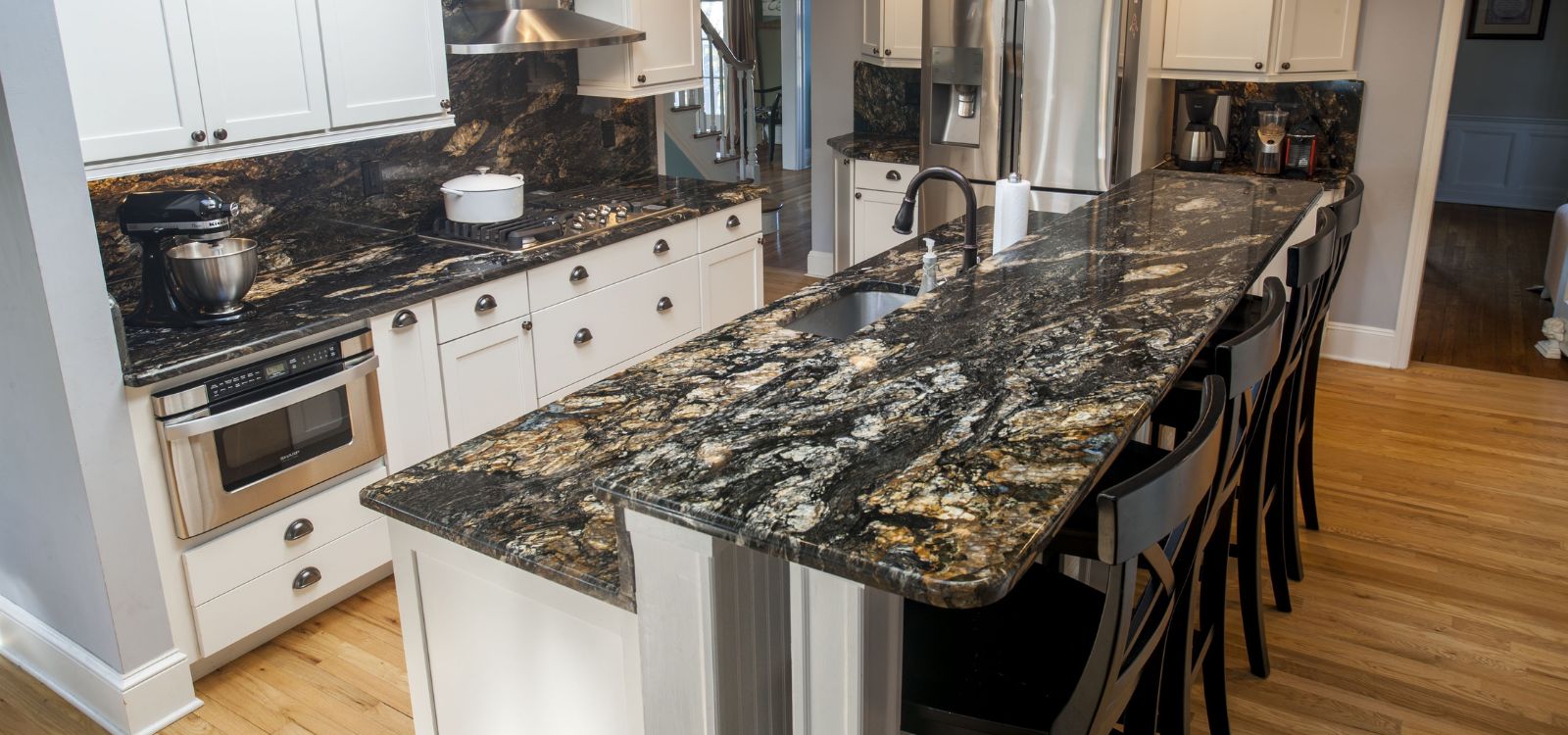
Granite is resistant to direct heat. Granite doesn’t react to cast iron straight from the stove, to hot baking sheets, or to boiling pots. It has been created by a geological process of heat and pressure, which no domestic kitchen would be able to reproduce!
Quartz has a real threshold. Polymer resin binders will be harmed by sustained temperatures above 150°F, resulting in a permanent ring, patch of discolored surface, or, in extreme cases, a visible crack. This is well known to the manufacturers, and it is always in the warranty documents, but not often the one that is displayed at the showroom.
Trivets are the solution to this problem. However, if you’re a chef who just instinctively moves a hot pan from the burner to the counter, then that is going to cost you on a quartz surface. It’s free on granite!
This is not a show-stopper for quartz: it’s a behavior change. However, it’s one you should know BEFORE the install.
UV Exposure and Color Fading
This is what is rarely discussed in sales talks and is always part of the specification.
The consistent colour, the subtle veining, and the deep colours are the sources of quartz’s visual character, which are provided by the synthetic pigments and polymer resins. Both are susceptible to degradation under long exposure to UV. Quartz will fade over time in kitchens with long windows, glass doors or skylights that receive prolonged direct sunlight. It’s gradual, and usually begins between 18 months and 3 years. It’s most clearly noted in dark colorways, such as charcoal, deep navy, and jet black. Granite’s color is a pure mineral color. The pinks and creams are from Feldspar. The dark spots are made of biotite and hornblende. Quartz crystals add the sparkle. All these minerals are lightfast. A granite slab looks the same at year one as it does at year twenty.
This should be a major consideration if you have lots of sun in your kitchen.
Porosity, Sealing, and What Maintenance Actually Looks Like
Quartz
- Non-porous by engineering, no sealing required, ever
- Naturally resistant to bacterial growth, moisture absorption, and most staining
- Daily cleaning is warm water and mild dish soap
- Where it’s vulnerable: seams between slabs and caulked edges, where mineral deposits from hard water can accumulate and discolor over time
Granite
- Porous by nature requires a penetrating, impregnating sealer applied every 12 to 18 months
- Application takes roughly 20 minutes and costs $15–$35 for a quality DIY product
- Without sealing, red wine, cooking oil, tomato sauce, and acidic liquids can penetrate and leave permanent staining
- With proper sealing, daily resistance to staining and moisture is comparable to quartz in practical use
The term “high maintenance” does not apply to granite, since it used to be a property of the old-school surface sealers that came and went in six months. Today’s penetrating stone sealers are bonded below the surface and remain for 12-18 months. One annual task. That’s granite’s only extra requirement.
Durability: Edge Resistance, Chipping, and Long-Term Wear
Both surfaces will withstand typical home wear and tear from scratching, scoring, and surface cracking. To use either as a cutting board is wrong, not because it will be harmed by the practice, but because in just a few weeks, your knife edges will be ruined. Granite is actually better with respect to edge and corner impact resistance. Granite is heavier and will take the impact of a dropped cast-iron pan or heavy object better than quartz will. Quartz corners and edges, especially eased or beveled edges, can be chipped clean if hit at the proper angle. Though it is not a frequent occurrence, it does happen, and quartz chips are harder to fix without being noticed than granite chips.
One area where quartz truly outperforms is the consistency of the slab-to-slab. Since it is made to a spec, two slabs of the same color will be virtually identical when used in a large kitchen run or an island plus perimeter design. Granite slabs from the same block will show different veining, tone, and mineral distribution. That variation is what all homeowners are looking for, for some people. To others, it’s a design challenge that demands careful slab selection and layout with your fabricator.
Actual 2026 Cost Breakdown
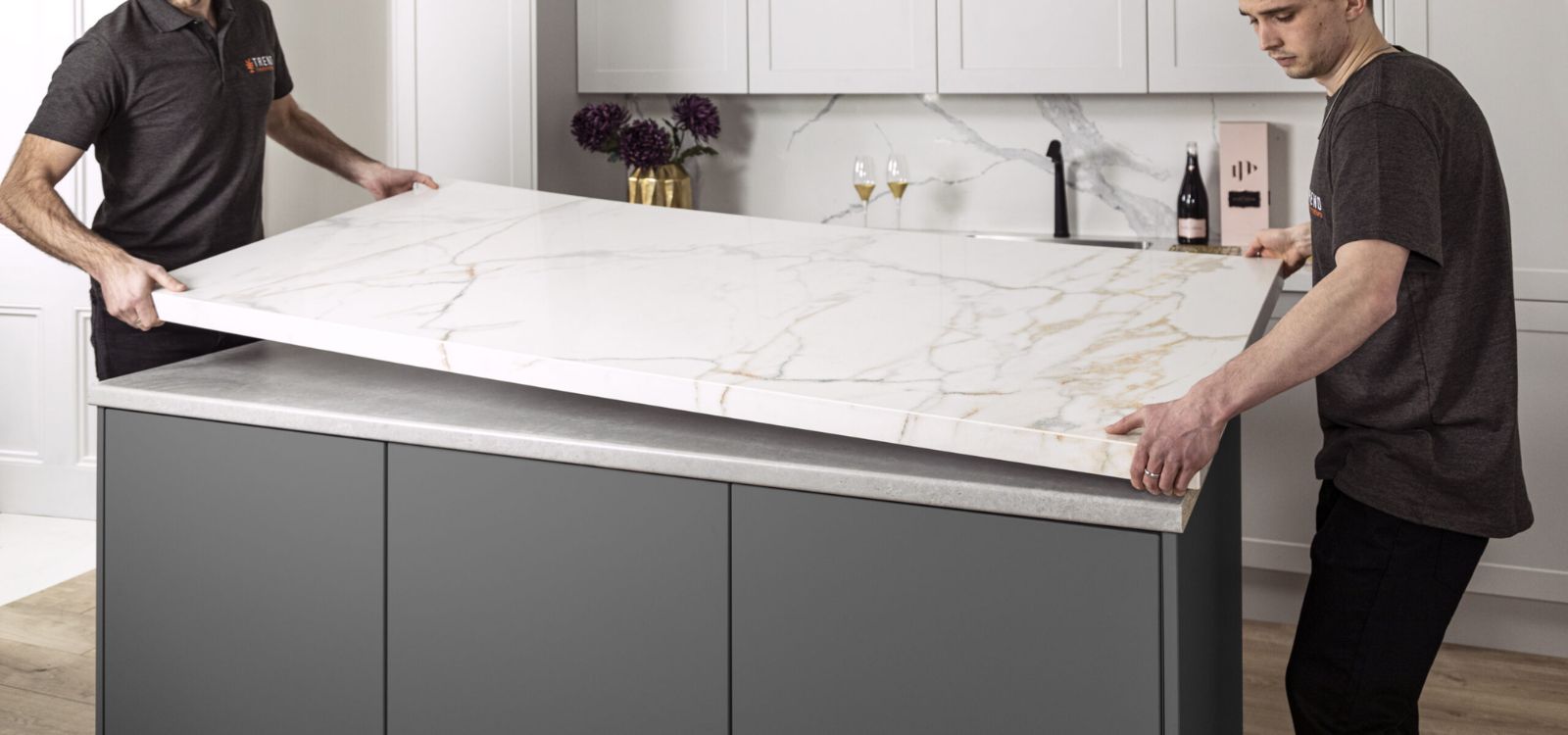
Installed mid-grade granite costs $45 to $85 per square foot. The price of mid-grade quartz ranges from $55 per square foot to $110 per square foot installed, which depends on the brand and pattern.
The actual kitchen counter tops cost difference between solid granite and solid quartz options is typically between $500 and $1,500 for a 45 sq.ft. countertop. Not the back-and-forth that people walk in expecting. In the last few years, the price of natural stone has been held competitive with the introduction of granite from Brazil and India. After years of price hikes driven by numerous disruptions in the supply chain, quartz prices have since levelled off.
The spread in pricing is huge at the high end. Exotic granite can weigh in at $120 to $180+ per square foot, depending on the specific colourways, and/or leathered/honed finishes. Designer pattern quartz flagships from Cambria, Caesarstone, and Silestone achieved similar figures. The materials are both accessible at the entry level. On the high end, they can be quite costly quickly.
The annual cost of sealing is about $20-$150, based on whether the sealing is done yourself or by professionals. Quartz is a zero-running cost material, but if the kitchen is used extensively, professional seam repair or edge restoration will be required at some point during its life.
Resale Value: What Buyers Actually Notice
Granite and quartz boast a high-end appearance for most price brackets. The gap between the two appraised values at mid-grade is very small. The perception takes place at the showings, where it counts. Granite’s natural variation, a dramatic movement pattern, an unusual mineral cluster, and a slab with genuine character create a kitchen that feels custom and irreplaceable. Buyers notice that. The uniformity of Quartz reads as clean and modern, a quality that is desirable in today’s homes, but can seem interchangeable with other homes in the same price range.
From a resale perspective, both options are incorrect. The more powerful signal to the buyer is the quality of the fabrication and installation of tight seams, clean edges, proper overhang, and more than what material is sitting on the cabinet.
The Decision Most People Get Backwards
Most buyers decide upon purchase based on what they see first, then find out about performance second. The smarter sequence is: identify how your kitchen actually functions, what your sun exposure looks like, how seriously you cook, and how much ongoing maintenance you’re willing to do then find the stone that fits within those real parameters. Select quartz for no-maintenance living, when you need a seamless, continuous color in a large project, a modern look, or if you have young children who use all surfaces as they would a table or a canvas.
If you cook on high heat frequently, your kitchen is exposed to direct sunlight for the most part, you want a surface that is truly unrepeatable or you’re planning to use your kitchen for decades, granite is the best option.
Denver Countertop Design adds a touch of material knowledge and honest guidance that’s all about the difference between choosing a material you can feel good about and one you’ll regret come summer.