
The majority of homeowners plan the installation of their countertops for several weeks. The average time to make a project from the day you decide on your slab until you start cooking on it is 3-5 weeks. Not 3 to 5 days. If you are not ready for such a window, it can throw off your entire kitchen renovation schedule! The frustrating part? Not much of that time is spent in actual installation. The installation is done in one day. All the rest of the month, most contractors don’t guide you through that upfront.
Here’s exactly what happens, in order, and where the time actually goes.
Step 1: Material Selection and Slab Approval (3–7 Days)
This is where you begin your clock. After selecting granite, quartz, quartzite, or marble, now you must approve the actual slab, which your countertop will be made from, not just a sample chip.
For engineered quartz, this step moves fast. You can be assured that what you see in the showroom is what you will receive. The majority of homeowners confirm their selection on the first visit and move on within a couple of days.
Slab approval for natural stone, such as granite, quartzite, and marble, is very real. Two slabs sold under the same name can look completely different in terms of veining movement, background tone, and mineral distribution. It’s worth taking the time to walk the slab yard and mark what you’re looking for. When you believe a picture, you get a stone that doesn’t look like what you expected.
Why Slab Yards Work Differently Than Showrooms
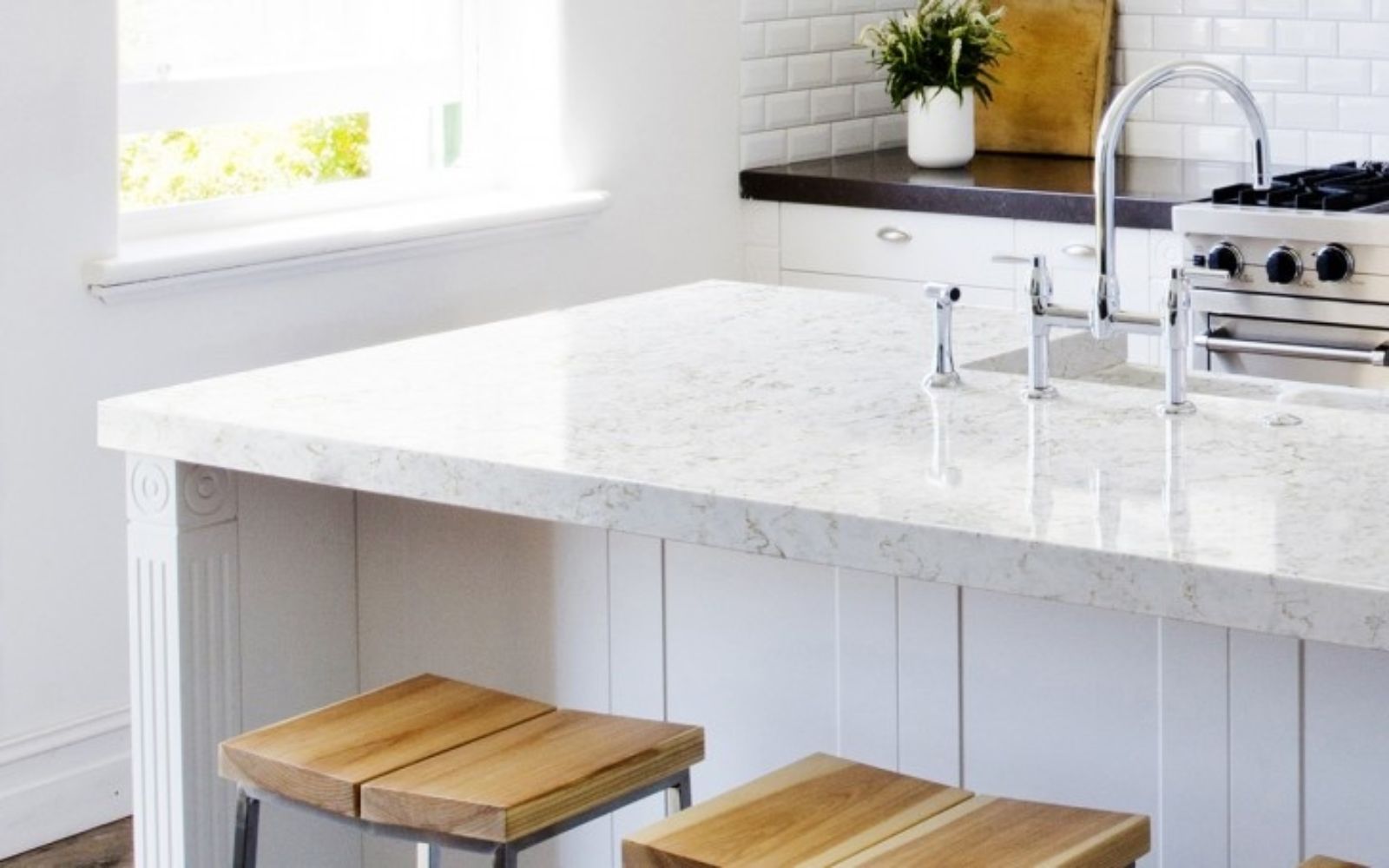
Small amounts of product are displayed in showrooms with controlled lighting. Slab yards provide you with a complete picture literally. A 4 by 8 slab is completely different from a 3″ chip, and the fall you fall for while taking a look at a sample might get lost on a larger piece of material, or may become more intense in ways you didn’t think of.
The reputable fabricators will take you to the yard as part of the process. If you can’t find that in your own, inquire about it. It’s a fair thing to ask for and a reflection of their future working methodologies.
Step 2: Templating The Step Nobody Explains (3–7 Days)
Templating is the most misunderstood part of the process, and it’s where homeowners lose patience unnecessarily. Before a single piece of stone gets cut, a fabricator comes to your home and takes precise measurements of your existing cabinet layout, every angle, every corner radius, every sink cutout, every cooktop position. New laser templating systems are now available, with the majority using digitized laser output directly into a CAD file. There are others who are still using physical template boards. In either case, the appointment takes place in your home and is 1-2 hours long.
The Cabinet Sequencing Problem
Here’s what slows this stage down more than anything else: templating can only happen after your cabinets are fully installed and level.
If your cabinet installation runs behind, which it often does, your entire countertop timeline shifts with it. This sequencing issue catches more homeowners off guard than any other part of a kitchen remodel. The countertop fabricator can’t do their job until the cabinet installer finishes theirs. Build that dependency into your project plan from day one.
Step 3: Fabrication Where the Real Waiting Happens (5–14 Days)
Once your template is finalized, the slab goes into the fabrication shop. This is where your countertop is actually cut, edged, polished, and prepared.
What Happens During Fabrication
- The digital template is mapped onto your slab to optimize material yield and veining alignment
- CNC waterjet or bridge saw cuts the stone to exact dimensions
- Edge profiles, such as eased, beveled, ogee, mitered, and waterfall, are shaped and polished
- Sink and cooktop openings are precision-cut
- Finished pieces are inspected, labeled by position, and staged for delivery
Standard jobs take 5 to 10 business days. Complex projects mitered waterfall islands, book-matched slabs, or specialty edge profiles, stretch to two full weeks. Busy renovation seasons push fabrication queues even longer.
Why You Can’t Rush Fabrication
With stone cutting, there is no going back. Your days are delayed by weeks, and your $2,000 – $4,000 slab is ruined by a fabricator who isn’t working fast enough and is cutting the wrong thing. This is meant to be a wait, and the fabricator who says they will rush without having a good reason should be followed up with a question as to how they are going to rush.
Step 4: Installation Day (4–8 Hours)
It’s only a matter of weeks after decisions, approvals, and shop work that the installation itself is almost quick by comparison.
A 2-person crew can install a standard kitchen in 4-8 hours. Larger kitchens with islands, multiple cutouts or complex layouts operate throughout the day. Typically, old countertops are removed in 30-60 minutes, followed by the installation of the new slabs, ensuring consistency in overhangs, and attaching them to the cabinet substrate.
Sink, Plumbing, and the One-Day Coordination Issue
Undermount sink reconnection happens after the stone is set. If you have the same sink, it is re-mounted and siliconed into the new countertop the same day. When installing a new sink, make sure your plumber shows up on the day or the first thing the next morning.
Overnight, an unattended sink that is not connected can be avoided and is actually quite common. Just one phone call before installation day, and it’s averted.
The Final Touch: Caulking and Backsplash Joints
The last step before your kitchen is usable is caulking the joint between the countertop and backsplash. This joint exists to handle natural movement between the stone and the wall. Skipping it or doing it poorly leads to cracking over time. It’s a small detail that matters a lot for long-term performance.
If your backsplash tile is going in after the countertop, coordinate that sequence with your tile installer so the caulk joint is handled correctly and not covered over with grout.
What Actually Causes Delays
Most timeline overruns don’t originate with the fabricator. They come from upstream decisions that weren’t locked in early enough.
The Most Common Delay Triggers
- Cabinets not level templating gets pushed until corrections are made
- Indecision on slab selection, every extra visit to the yard adds days
- Special-order edge profiles, non-standard profiles, require additional shop time
- Permit or inspection holds broader renovation delays ripple directly into countertop scheduling
- Appliance delivery conflicts, cooktop or sink arriving late, create cutout timing issues
- Change of material mid-process switching from quartz to granite after templating restarts the entire sequence
The homeowners who hit the short end of the timeline made decisions early, approved slabs in one visit, and had level cabinets ready before the templating appointment was ever scheduled.
The Realistic Full Timeline
The typical duration is broken down into Stage, Typical Duration, and Material selection & slab approval, Templating scheduling & appointment, Fabrication, Installation day, and Total.
This may be extended to 6-7 weeks for complex projects or during busy seasons. It’s not a fault, it’s just normal. It is the one that the homeowners who are having difficulties with it didn’t know about.
The Bottom Line
So, when to Start the Conversation With Your Fabricator? Not when your cabinets are done. Earlier. Preferably prior to demolition.
The moment you are on a fabricator’s schedule, you are touring slab yards, and you have made your material choice before your cabinets are even installed, you will know that the time for templating will be now, rather than two more weeks when you will be in line.
That single shift in timing is the difference between a 3-week project and a 5-week one for most homeowners.
When you need a fabricator that is clear about the timeframe, keeps you in the loop at all times, and doesn’t make you wonder where your project is at with your cabinets, Denver Countertop Design is a good place to call before your cabinets are installed. Now is the time to begin!